Math
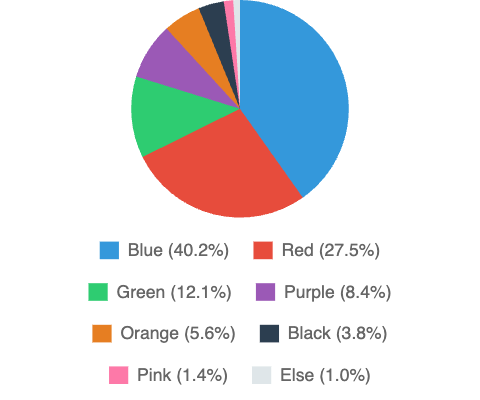
Math isn’t just numbers – it’s a color-coded battlefield of logic, patterns, and emotional damage. And according to the data, Math has a clear visual identity: Blue dominates at 40.2%, which makes sense for a subject that feels calm, strict, and structured. Red (27.5%) shows the stress, urgency, and frustration of problem sets due at midnight. Green (12.1%) brings the energy of growth and discovery, while Purple (8.4%) adds creativity for geometry, proofs, and the courage to raise your hand when you’re 73% sure you’re wrong. Smaller slices like Orange, Black, Pink, and “Else” reflect the chaos of different learning styles: some people see math as bright and energetic, others see it as a void of despair. Altogether, math is a vibrant mix of logic, anxiety, insight, and occasional triumph.
Science
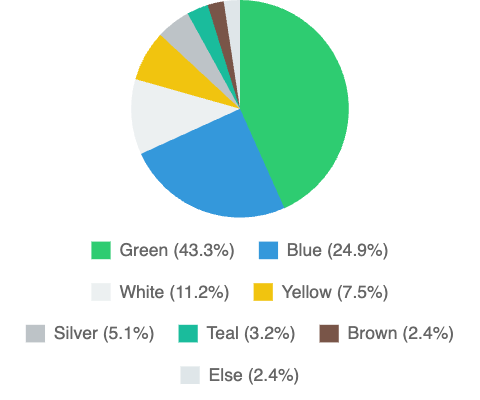
Science is curiosity turned into a class — a mix of explosions, diagrams, random Latin words, and the occasional frog. Its color story is crystal clear: Green leads at 43.3%, tying science to nature, biology, and everything alive. Blue (24.9%) captures physics, skies, oceans, and the serious “lab coat energy” of scientific method. White (11.2%) connects to cleanliness, safety, and the sterile aesthetic of goggles and gloves. Then there’s Yellow, Silver, Teal, Brown, and a bit of Else — colors of chemicals, minerals, sunlight, soil, and mysterious substances teachers promise are “non-toxic.” Altogether, science feels like a colorful map of everything from micro to macro, always expanding and always surprising.
English
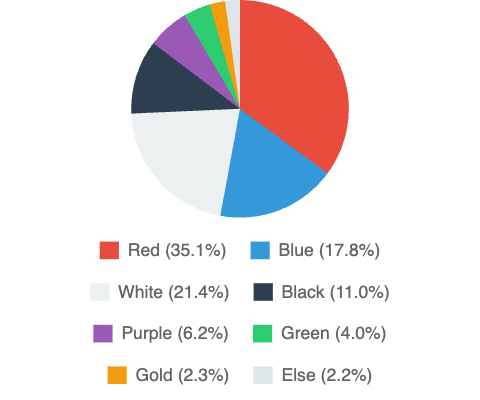
English is the world of stories, essays, metaphors, and that one teacher who insists symbolism is everywhere. Color-wise, people see English through emotion: Red (35.1%) leads, representing passion, drama, and the intensity of literature and writing. White (21.4%) captures blank pages, clean essays, and the clarity of communication. Blue (17.8%) brings calm, depth, and the reflective mood of reading. The smaller colors — Black, Purple, Green, Gold, and Else — reflect English’s versatility: mystery, imagination, growth, richness, and interpretation. English isn’t just a class; it’s a spectrum of emotions expressed through language, and the colors reflect every mood you can write about.
History
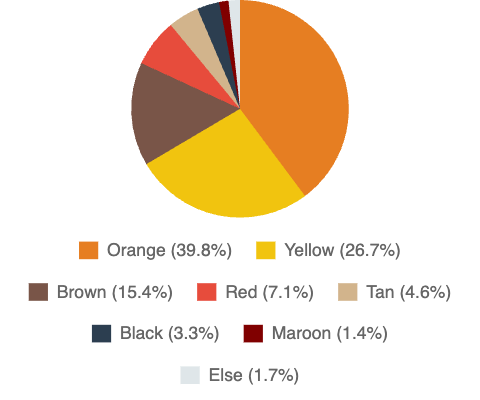
History is the never-ending story of humanity — victories, failures, wars, revolutions, inventions, and the questionable decision-making of people long dead. Its colors mirror its themes: Orange (39.8%) dominates, echoing old maps, aged parchment, and the fiery events that shaped civilizations. Yellow (26.7%) ties to illumination, discovery, and the “lightbulb moments” of understanding why something happened. Brown (15.4%) reflects ancient ruins, artifacts, and the earthy feel of the past. Smaller slices — Red, Tan, Black, Maroon, and Else — represent conflict, empires, shadows of uncertainty, and the complexity of interpreting events. History’s color palette is warm, old, and dramatic — just like the stories it tells.
Language
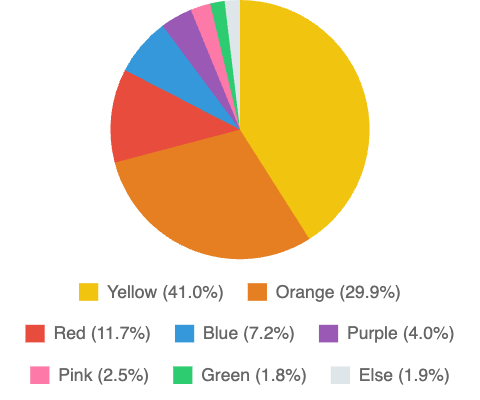
Language class is your passport to new cultures, new sounds, and new ways of thinking. Its color identity is bright and bold: Yellow leads at 41.0%, symbolizing communication, warmth, and the spark of learning vocabulary. Orange (29.9%) adds energy, enthusiasm, and the lively feeling of speaking with real people in a new tongue. Red (11.7%) brings intensity — the emotional rollercoaster of conjugations and oral exams. The remaining colors — Blue, Purple, Pink, Green, and Else — reflect the diversity of languages themselves: expressive, melodic, cultural, sometimes confusing, always rewarding. Language learning is vibrant, and its colors show how alive communication can be.
Electives / Computer Science
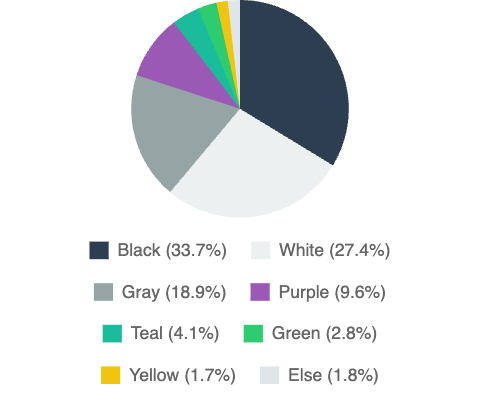
Electives are where students explore what they actually care about, and computer science is the mix of logic, creativity, and chaos that powers the digital world. Its color identity is striking: Black (33.7%) leads, perfectly fitting coding terminals, dark mode, and the mystery of algorithms. White (27.4%) follows as the contrast — clarity, output, and blinking cursors waiting for ideas. Gray (18.9%) reflects hardware, machinery, and the in-between spaces of problem-solving. Then you get splashes of Purple, Teal, Green, Yellow, and Else — representing creativity, innovation, logic, and experimentation. Electives are colorful because they’re personal, and computer science especially blends structure with imagination, one line of code at a time.